


¿Qué es la renta básica? ¿Por qué la han defendido tanto liberales como socialdemócratas, comunistas, feministas o ecologistas? ¿Es eficiente desde el punto de vista del crecimiento económico y de la creación de empleo? Y sobre todo: ¿es justa? Éstas son algunas de las preguntas a las que da respuesta Juan Ramón Rallo en Contra la renta básica, un libro que aborda la que probablemente termine siendo la política redistributiva más importante del siglo XXI. En contra de lo que suele pensarse, la principal razón por la que el autor rechaza la renta básica no es económica, sino ética: la solidaridad es un fin muy loable, pero no puede ser impuesta por la fuerza. «No es el fin el que justifica los medios, sino que son los medios los que permiten justificar los fines»: también en el caso de la redistribución estatal de la renta. Según demuestra Rallo analizando críticamente las principales corrientes filosóficas contemporáneas como la socialdemocracia, el republicanismo, el comunismo, el utilitarismo, el feminismo o el ecologismo, la redistribución coactiva de la renta no puede justificarse desde un punto de vista ético: forzar a una persona a subordinar sus proyectos vitales a los proyectos vitales de los demás es injusto, intolerante y contrario a las bases sociales de la convivencia. De ahí que sólo el liberalismo proporcione un marco de justicia que permite el desarrollo moral de cada individuo sin interferir violentamente sobre el desarrollo moral del resto de individuos. Y de ahí que la renta básica, al vulnerar la mucho más básica libertad personal, sólo nos aleje de ese ideal de una sociedad genuinamente voluntaria y cooperativa. En el presente ensayo no sólo encontrará la crítica más completa y sistemática a la redistribución coactiva de la renta por parte del Estado, sino también todo un tratado de filosofía política dirigido a reivindicar y defender el liberalismo como una realista utopía integral e integradora frente a sus principales alternativas ideológicas.


AN INSTANT #1 NEW YORK TIMES BESTSELLER! Never stop...Never forget...Just remember. Charlie Wynwood and Silas Nash have been best friends since they could walk. They've been in love since the age of fourteen. But as of this morning...they are complete strangers. Their first kiss, their first fight, the moment they fell in love...every memory has vanished. Now Charlie and Silas must work together to uncover the truth about what happened to them and why. But the more they learn about the couple they used to be...the more they question why they were ever together to begin with. Forgetting is terrifying, but remembering may be worse. Heart-stopping and utterly captivating, the complete Never Never series, now available in one volume, will leave readers breathless and believing in the power of love. Perfect for fans of: * Verity, Too Late and The Wives * New Adult and Coming of Age stories * Angsty, romantic suspense * First loves and second chances * Colleen Hoover, Tarryn Fisher, Mia Sheridan and Lucy Score Don't miss the bestselling romantic mystery— Now available in a stunning hardcover Collector's Edition featuring nine exclusive illustrations, a foil-stamped case, beautifully sprayed edges and custom designed endpapers!

This New York Times bestseller and business classic has been fully updated for a world where skilled communication is more important than ever. The book that revolutionized business communications has been updated for today’s workplace. Crucial Conversations provides powerful skills to ensure every conversation―especially difficult ones―leads to the results you want. Written in an engaging and witty style, it teaches readers how to be persuasive rather than abrasive, how to get back to productive dialogue when others blow up or clam up, and it offers powerful skills for mastering high-stakes conversations, regardless of the topic or person. This new edition addresses issues that have arisen in recent years. You’ll learn how to: * Respond when someone initiates aCrucial Conversationwith you * Identify and address the lag time between identifying a problem and discussing it * Communicate more effectively across digital mediums When stakes are high, opinions vary, and emotions run strong, you have three choices: Avoid a crucial conversation and suffer the consequences; handle the conversation poorly and suffer the consequences; or apply the lessons and strategies of Crucial Conversations and improve relationships and results. Whether they take place at work or at home, with your coworkers or your spouse, Crucial Conversations have a profound impact on your career, your happiness, and your future. With the skills you learn in this book, you'll never have to worry about the outcome of a Crucial Conversation again.
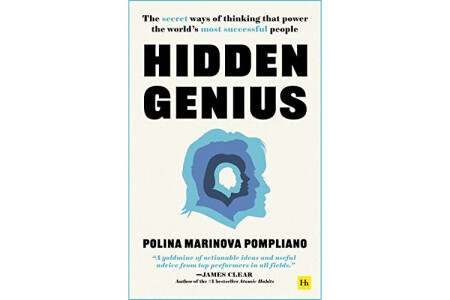
What distinguishes the truly exceptional from the merely great? After five years of writing The Profile, Polina Marinova Pompliano has studied thousands of the most successful and interesting people in the world and examined how they reason their way through problems, unleash their creativity, and perform under extreme pressure. The highest performers don’t use tricks or hacks to achieve greatness. They use mental frameworks that fundamentally change the way they see the world. They’ve learned how to unlock their hidden genius in order to reach their full potential. This book will help you do the same. After learning from the world’s most successful people featured inside, you will have a mental toolkit to help you tackle thorny problems, navigate relationships, and use creativity and resilience in times of uncertainty.

TCP/IP Illustrated, an ongoing series covering the many facets of TCP/IP, brings a highly-effective visual approach to learning about this networking protocol suite. TCP/IP Illustrated, Volume 2 contains a thorough explanation of how TCP/IP protocols are implemented. There isn't a more practical or up-to-date bookothis volume is the only one to cover the de facto standard implementation from the 4.4BSD-Lite release, the foundation for TCP/IP implementations run daily on hundreds of thousands of systems worldwide. Combining 500 illustrations with 15,000 lines of real, working code, TCP/IP Illustrated, Volume 2 uses a teach-by-example approach to help you master TCP/IP implementation. You will learn about such topics as the relationship between the sockets API and the protocol suite, and the differences between a host implementation and a router. In addition, the book covers the newest features of the 4.4BSD-Lite release, including multicasting, long fat pipe support, window scale, timestamp options, and protection against wrapped sequence numbers, and many other topics. Comprehensive in scope, based on a working standard, and thoroughly illustrated, this book is an indispensable resource for anyone working with TCP/IP.

Desmontando la leyenda negra desde Bartolomé de las Casas hasta el separatismo catalán. «En Madre patria, el profesor Marcelo Gullo Omodeo demuestra que lo que está pasando ahora en España, en su contexto histórico y geográfico, es imposible de separar de la América hispana. Las cuentas pendientes son las mismas: afianzar las democracias y conjurar la inestabilidad territorial, cara y cruz de la misma moneda. Sorprende que el autor viva la profunda crisis que España atraviesa con tanta implicación y más sentido de la responsabilidad que muchos españoles». María Elvira Roca Barea En este monumental libro, Marcelo Gullo Omodeo demuestra que la leyenda negra fue la obra más genial del marketing político británico. Que, de manera inconcebible, los españoles se han creído la historia de España e Hispanoamérica que escribieron sus enemigos tradicionales, y se avergüenzan de un pasado del que deberían sentirse orgullosos. Que Hernán Cortés no fue el conquistador de México, sino el libertador de cientos de pueblos indígenas que estaban sometidos al imperialismo más feroz que ha conocido la historia de la humanidad: el de los aztecas. Que no fueron Pizarro y el puñado de españoles que lo acompañaban los que pusieron fin al imperialismo totalitario de los incas, sino los indios huancas, los chachapoyas y los huaylas. Que las masas indígenas en Colombia, Ecuador y Perú se mantuvieron fieles a la Corona española hasta el final. Que los libertadores Simón Bolívar y José de San Martín no quisieron romper de forma absoluta los vínculos que unían a América con España, sino que buscaron con todas sus fuerzas la creación de un gran imperio constitucional hispanocriollo con capital en Madrid. O que la responsabilidad de la disolución del Imperio español la tuvo Fernando VII, que prefirió estar preso en Europa y no libre en América. Concluye el autor señalando que nada separa a España de América, ni a América de España, salvo la mentira y la falsificación de la historia, y que el futuro de ambas depende de que sean capaces de desterrar para siempre el mito de la leyenda negra de la conquista española de América.

No description available.

New York Times and USA Today bestselling author Lucy Score returns to Knockemout, Virginia, following fan-favorite Things We Never Got Over with Knox's brother Nash's story. Nash Morgan was always known as the good Morgan brother, with a smile and a wink for everyone. But now, this chief of police is recovering from being shot and his Southern charm has been overshadowed by panic attacks and nightmares. He feels like a broody shell of the man he once was. Nash isn't about to let anyone in his life know he's struggling. But his new next-door neighbor, smart and sexy Lina, sees his shadows. As a rule, she's not a fan of physical contact unless she initiates it, but for some reason Nash's touch is different. He feels it too. The physical connection between them is incendiary, grounding him and making her wonder if exploring it is worth the risk. Too bad Lina's got secrets of her own, and if Nash finds out the real reason she's in town, he'll never forgive her. Besides, she doesn't do relationships. Ever. A hot, short-term fling with a local cop? Absolutely. Sign her up. A relationship with a man who expects her to plant roots? No freaking way. Once she gets what she's after, she has no intention of sticking around. But Knockemout has a way of getting under people's skin. And once Nash decides to make Lina his, he's not about to be dissuaded…even if it means facing the danger that nearly killed him.

#1 NEW YORK TIMES BESTSELLER / #1 WALL STREET JOURNAL BESTSELLER / #1 PUBLISHER'S WEEKLY BESTSELLER / #1 AMAZON BESTSELLER No American leader has accomplished more for his state than Governor Ron DeSantis. Now he reveals how he did it. He played baseball for Yale, graduated with honors from Harvard Law School, and served in Iraq and in the halls of Congress. But in all these places, Ron DeSantis learned the same lesson: He didn’t want to be part of the leftist elite. His heart was always for the people of Florida, one of the most diverse and culturally rich states in the union. Since becoming governor of the Sunshine State, he has fought—and won—battle after battle, defeating not just opposition from the political left, but a barrage of hostile media coverage proclaiming the end of the world. When he implemented COVID-19 policies based on evidence and focused on freedoms, the press launched a smear campaign against him, yet Florida’s economy thrived, its education system outperformed the nation, and Florida’s COVID mortality rate for seniors was lower than that in thirty-eight states. When he enacted policies to keep leftist political concepts like critical race theory and woke gender ideology out of Florida’s classrooms, the media demagogued his actions, but parents across Florida rallied to his cause. Dishonest attacks from the media don’t deter him. In fact, DeSantis keeps racking up wins for Floridians. In 2022, the governor delivered a historic, record-setting victory, winning by nearly 20 points and more than 1.5 million votes. A firsthand account from the blue-collar boy who grew up to take on Disney and Dr. Fauci, The Courage to Be Free delivers something rare from an elected leader: stories of victory. This book is a winning blueprint for patriots across the country. And it is a rallying cry for every American who wishes to preserve our liberties. This is more than a memoir—it’s a playbook for victory. * Conservative Leadership: From the ball fields of Yale to the halls of Congress and the battlefields of Iraq, discover the firsthand account of how a blue-collar kid developed the courage to lead. * Fighting Woke Ideology: Go behind the scenes of the battles against leftist concepts like critical race theory and woke corporations like Disney, and learn how to win the fight for common sense. * Economic Freedom: Learn the principles behind Florida’s thriving economy, which outperformed the nation by rejecting disastrous lockdowns and focusing on individual liberty. * An American Revival: A detailed blueprint for patriots on how to defeat the leftist elite, stand up to a hostile media, and preserve American liberties for future generations.

- Custom three-capsule array: This professional USB mic produces clear, powerful, broadcast-quality sound for YouTube videos, Twitch game streaming, podcasting, Zoom meetings, music recording and more - Blue VO!CE software: Elevate your streamings and recordings with clear broadcast vocal sound and entertain your audience with enhanced effects, advanced modulation and HD audio samples - Four pickup patterns: Flexible cardioid, omni, bidirectional, and stereo pickup patterns allow you to record in ways that would normally require multiple mics, for vocals, instruments and podcasts - Onboard audio controls: Headphone volume, pattern selection, instant mute, and mic gain put you in charge of every level of the audio recording and streaming process - Positionable design: Pivot the mic in relation to the sound source to optimize your sound quality thanks to the adjustable desktop stand and track your voice in real time with no-latency monitoring - Plug 'n Play: Set up the computer microphone in seconds with the included desktop stand or connect directly to a mic stand or boom arm and instantly start recording and streaming on Mac or PC
Color: Silver

- Excellent tuning and sound quality - Made from durable and safe ABS plastic resin with no BPA - Double holes for low C/C number and D/D number to improve tuning - Simplified German fingering - Includes cotton carrying bag and fingering chart - Easy to play with a soft pure tone - Ideal amount of air resistance for easy control and accurate intonation - Key of C - Great for beginners - German style fingering (as indicated by “G” stamped packaging)
Style: German

- Show the true professional you are with our #1 USB microphone Yeti and C922x Pro, the ultimate solution for pro video-calls - Yeti’s legendary Blue broadcast audio quality will make you sound incredibly clear during all your meetings - And with C922x Pro webcam’s crisp and vivid video quality, it will be like if you were in the same room as your peers - With Blue VO!CE, block out unwanted noise and craft the perfect vocal sound for your work needs - Cardioid, omni, bidirectional, and stereo pickup patterns allow you to capture sound in multiple ways, whatever the situation - Stream and record vibrant, true to life HD 1080P video at 30FPS/ 720P at 60FPS, with Hyperfast frame rate - Full HD glass lens and premium autofocus deliver razor sharp, clear video in consistent high definition

There are products from different external stores in your basket, so a wish for each external store will be created.
Note: You will be able to configure each wish individually before publishing it.

 Spanish
(Español)
Spanish
(Español)
 German
(Deutsche)
German
(Deutsche)
 French
(Français)
French
(Français)
 Italian
(Italiano)
Italian
(Italiano)
 Portuguese
(Portugues)
Portuguese
(Portugues)

