


- Dual USB/XLR Connectivity-Seamlessly connect the PC gaming microphone to your devices. USB works greatly with PC, and XLR works greatly with mixer sound card. (Tips: Keep the top of end-addressing XLR dynamic microphone AM8 facing audio source, and suggested recording range is 2 to 6 in.) - Mesmerizing RGB Lighting-The desktop gaming microphone illuminates your gaming setup with captivating RGB lighting, bringing a touch of elegance and beauty to your white-themed gaming station. And you can turn on/off and change the lighting by tapping RGB button. (Only available for USB connection) - Sleek Desktop Design-The compact and stylish gaming mic for PC complements your white gaming setup, adding a stylish touch to your streaming sessions. - Total Control at Your Fingertips-Adjust audio settings effortlessly with the tap-to-mute, gain knob, headphones jack and headphones volume control on the cardioid dynamic microphone, ensuring optimal sound quality. (Only available for USB connection) - Versatility at Its Finest-Tailored specifically for gaming and streaming enthusiasts, The XLR microphone delivers exceptional audio performance for an immersive experience. This multipurpose microphone goes beyond gaming and streaming, ideal for podcasting, voiceovers, and various other creative endeavors.
Color: White
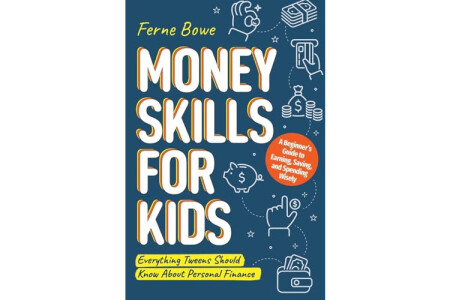
ESSENTIAL MONEY SKILLS EVERY KID SHOULD KNOW! Are you looking for a gift that will entertain your child and empower them with valuable life skills? WELL, LOOK NO FURTHER! "Money Skills for Kids," by Ferne Bowe (author of "Money Skills for Teens" and "Life Skills for Tweens"), is the book you've been searching for. Packed with practical advice, real-life examples, and interactive activities, it is designed to make the complex world of understanding money fun, accessible and engaging. Perfect for kids aged 8 to 13, this book is an educational tool - that takes the reader on the journey through the maze of money management, transforming them into savvy savers and wise spenders. READY TO START THE JOURNEY INTO THE WORLD OF MONEY? HERE'S A SNEAK PEEK AT WHAT'S INSIDE: * Unravel the mystery of earning and spending money wisely. * Learn how to transform a brilliant money-making idea into reality. * Master the art of saving with easy and effective strategies. * Take the first step in banking by choosing and opening a savings account. * Set and achieve financial goals like a pro. * Learn the crucial difference between needs and wants. * Dip your toes into the fascinating world of investing. And that's just the beginning! Every chapter is a stepping stone towards becoming financially independent. GIVE THEM THE GIFT OF MONEY SKILLS! Prepare your child for a future where money is a tool, not a challenge. Help them on their journey towards confidence, independence, and smart financial decisions. Click 'Add to Cart' now and set your child on the path to financial success.

Desvela los mecanismos ocultos de la dominación mundial con Globalismo: Ingeniería social y control total en el siglo XXI. El exitoso autor Agustín Laje desentraña magistralmente la malvada realidad de nuestro mundo moderno e ilumina las tinieblas de las fuerzas de poder que tratan de controlar a la humanidad. El globalismo no es globalización, sino una demoledora ideología que supone el más ambicioso proyecto de ingeniería social y control total en curso. Institucionalizada en organizaciones que, por definición, no tienen ni patria, ni territorio ni pueblo, esta ideología pretende parir un régimen político antidemocrático de alcance global. Así la soberanía de las naciones se redistribuye entre organizaciones supranacionales como el Foro Económico Mundial o la ONU con su Agenda 2030, liberadas de las limitaciones de los intereses particulares de los pueblos, para coordinar las transformaciones necesarias para nuestra «supervivencia». El globalismo también propone nuevas formas de legitimidad basadas en la tecnocracia y la supuesta filantropía de organizaciones como la Fundación Gates, la Open Society de Soros, y la Fundación Rockefeller. En esta obra, Agustín Laje explica magistralmente el origen y la formación del contrato social de nuestros Estados nacionales sobre una base democrática, mostrando cómo el globalismo busca culpabilizar estas estructuras para llevarnos a un callejón sin salida, donde todo se cede a una gobernanza global no representativa, la máxima expresión de la oligarquía de unos pocos privilegiados a los que nadie votó, y que ante nadie rinden cuentas pero que pretenden dirigir el destino del planeta. El autor llama a todos los actores sociales, políticos, religiosos e intelectuales a unirse contra el globalismo. La paradoja de que los patriotas olviden sus fronteras para esta batalla cultural adquiere un nuevo significado. Conocer la verdad y denunciar la mentira es un arma valiosa que este libro ofrece. Globalism Uncover the secret workings of world domination with Globalism: Social Engineering and Total Control in the 21st Century. Best-selling author Agustín Laje masterfully unravels the sinister reality of our modern world and sheds light on the darkness of the forces of power that seek to control humanity. Globalism is not globalization, but rather a devastating ideology representing the most ambitious social engineering and total-control project currently underway. Institutionalized by organizations such as the World Economic Forum or the UN with its Agenda 2030, Globalism also promotes new forms of legitimacy based on “technocracy” and the supposed philanthropy of organizations such as the Gates Foundation, Soros’ Open Society, and the Rockefeller Foundation. In this book, Agustín Laje skillfully explains the origin and formation of the social contract of our nation-States based on democracy, demonstrating how globalism seeks to blame these structures in order to steer us into a dead-end, where everything is handed over to a non-representative global governance. This represents the ultimate expression of an oligarchy formed by a few privileged elites who were elected by no one and are accountable to nobody, yet aim to dictate the destiny of the planet. The author calls on all social, political, religious, and intellectual figures to unite against globalism. The paradox of patriots disregarding their borders for this cultural battle takes on a new significance. Knowing the truth and denouncing the lie is a valuable weapon that this book offers.

The panic of 1819 was America's first great economic crisis. And this is Murray Rothbard's masterful account, the first full scholarly book on the topic and still the most definitive. It was his dissertation, published in 1962 but nearly impossible to get until this new edition.The American Economic Review was wild for this book when it appeared: "Rothbard's work represents the only published, book-length, academic treatise on the remedies that were proposed, debated, and enacted in attempts to cope with the crisis of 1819," the reviewer wrote. "As such, the book should certainly find a place on the shelf of the study of U.S. business cycles and of the economic historian who is interested in the early economic development of the United States."And specialists have treasured the book for years. It is incredible to realize that some American historians think of M.N. Rothbard as the author of this book and nothing else!The panic of 1819 grew largely out of the changes wrought by the War of 1812, and by the postwar boom that followed. The war also brought a rash of paper money, as the government borrowed heavily to finance the conflict. This would inevitably lead to suspension of specie payments in some parts of the country in 1814.Freed from the shackles of hard money, the suspension of specie led to a boom. When peace came, the so did the bust.But in the end, there was no widespread confusion on what caused the downturn. Instead, it was widely known that false prosperity is a very dangerous thing. It always turns to bust. But unlike today, the government didn't intervene. And precisely because there was no intervention, the panic ended quickly and peacefully.What we have here, then, is not only a dazzling historical account — the research here is deep and thorough, and the prose a model of exposition; it also points the way to how all economic downturns can and should be handled. For that reason, the Panic of 1819 offers important lessons for us today.To search for Mises Institute titles, enter a keyword and LvMI (short for Ludwig von Mises Institute); e.g., Depression LvMI

In this "provocative" book (New York Times), a contrarian physicist argues that her field's modern obsession with beauty has given us wonderful math but bad science. Whether pondering black holes or predicting discoveries at CERN, physicists believe the best theories are beautiful, natural, and elegant, and this standard separates popular theories from disposable ones. This is why, Sabine Hossenfelder argues, we have not seen a major breakthrough in the foundations of physics for more than four decades. The belief in beauty has become so dogmatic that it now conflicts with scientific objectivity: observation has been unable to confirm mindboggling theories, like supersymmetry or grand unification, invented by physicists based on aesthetic criteria. Worse, these "too good to not be true" theories are actually untestable and they have left the field in a cul-de-sac. To escape, physicists must rethink their methods. Only by embracing reality as it is can science discover the truth.
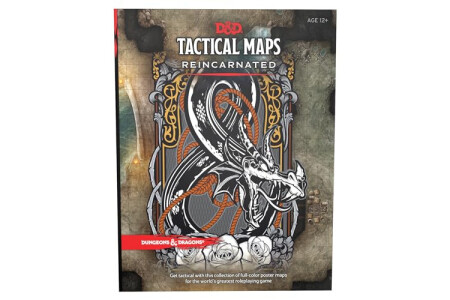
Bring your Dungeons & Dragons game to life with this collection of twenty beautifully rendered, full-color, tactical poster maps. Maps are a key element of every Dungeons & Dragons campaign. A map's importance in bringing your world to life can't be overstated. The same can be said for your encounter maps. Sometimes you need a visual representation of the area your adventurers are in, or perhaps tactical combat is simply the way your group rolls. However you play, we've got you covered. Twenty beautifully rendered, tactical poster maps are contained herein, perfect for bringing any D&D game to life. - 20 full color poster maps. Each is adorned with a 1-inch grid, perfect for use with D&D miniatures. - A wide assortment of terrain, environments, and locations are represented. - This "Best of" collection is carefully chosen from some of our most exciting adventures: - Tomb of Horrors (4th edition) - Vor Rukoth (4th edition) - Demon Queen's Enclave (4th edition) - Death's Reach (4th edition) - The Book of Vile Darkness (4th edition) - Kingdom of the Ghouls (4th edition) - Dungeon Master's Kit (4th edition) - Orcs of Stonefang Pass (4th edition) - Fields of Ruin (3rd edition) - Gargantuan Blue Dragon (3rd edition) - Vaults of the Underdark (4th edition) - Legend of Drizzt Scenario Pack (3rd edition) - Colossal Red Dragon (3rd edition) - Red Hand of Doom (3rd edition)

The revolutionary literary vision that sowed the seeds of Objectivism, Ayn Rand's groundbreaking philosophy, and brought her immediate worldwide acclaim. This modern classic is the story of intransigent young architect Howard Roark, whose integrity was as unyielding as granite...of Dominique Francon, the exquisitely beautiful woman who loved Roark passionately, but married his worst enemy...and of the fanatic denunciation unleashed by an enraged society against a great creator. As fresh today as it was then, Rand’s provocative novel presents one of the most challenging ideas in all of fiction—that man’s ego is the fountainhead of human progress... “A writer of great power. She has a subtle and ingenious mind and the capacity of writing brilliantly, beautifully, bitterly...This is the only novel of ideas written by an American woman that I can recall.”—The New York Times


******NOW UPDATED – April 22nd Edition****** This is the new, revised, and enhanced edition of the Ethiopian Bible – Sacred Books Beyond the Canon. Based on valuable reader feedback, we have completely reformatted and improved the content for better readability, deeper clarity, and higher quality. Please note: any negative reviews reflect earlier versions of this work, not the current edition. From today, April 22nd, this volume represents a refined and expanded version, with modernized language, corrected structure, and a spiritual presentation faithful to the Ethiopian tradition. Inside you will find: * Modern English versions of sacred Ethiopian texts * Complete books like 1 Enoch, Jubilees, Meqabyan I–III, Psalms of Solomon, and more * Restored apostolic writings like 1 & 2 Clement and the Didascalia * A bonus QR code to access additional canonical resources online 📖 Ethiopian Bible in English Complete LARGE PRINT with Apocrypha & Sacred Ethiopian Scriptures ✨ Explore One of the Oldest and Most Complete Bibles in History! ✨ The Ethiopian complete Bible is one of the oldest, most complete, and unique biblical collections in the world. Unlike Western Bibles, it contains 88 books, including the Apocrypha and other sacred Ethiopian scriptures preserved for centuries. Now available in English, this unabridged edition allows readers to experience the Ethiopian Scriptures like never before! 📜 What Makes This Bible Unique? ✅ Complete 88 Book Collection – Includes the Apocrypha and rare sacred Ethiopian texts. ✅ Authentic Ethiopian Orthodox Canon – Preserved for generations in Ethiopian Christianity. ✅ Ancient Scriptures Restored – Discover lost biblical texts that provide deep historical and theological insights. ✅ A Must-Have for Scholars & Believers – Perfect for those seeking a broader biblical perspective beyond the Western canon. This is not just another Bible—it’s the most complete Ethiopian Bible in English Complete large print edition, featuring 88 books, 🔹 The Bible as it was meant to be – Discover scriptures kept intact for centuries. 🔹 Lost books, lost wisdom – Insights into early Christianity and ancient Jewish traditions. 🔹 Perfect for study & devotion – Essential for scholars, believers, and history enthusiasts. 📖 Perfect for: ✔ Bible scholars and historians exploring early Christianity. ✔ Christian believers seeking a more complete biblical understanding. ✔ Students of religion and theology interested in ancient sacred texts. ✔ Collectors of rare and historic biblical texts. 📚Ethiopian bible in english complete large print This Complete 88 Book Large Print Edition in English is the most accurate and accessible version available today.
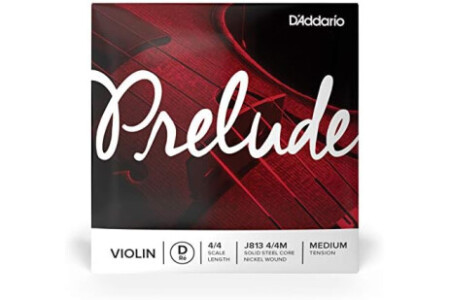
- EDUCATOR’S CHOICE – Designed with quick bow response and ease of use in mind, our violin strings are a unique blend of warm tone, affordability and durability making them ideal for both new and experienced student violinists. - SOLID STEEL CORE – Prelude violin strings are manufactured using a solid steel core for maximum durability and warmest sound. Available in both full and fractional sizes, the Prelude line has an option for any age student. - MADE TO LAST – Solid steel construction and uniquely-designed sealed pouches, Prelude strings have an unparalleled protection from the elements that cause corrosion and are unaffected by temperature and humidity changes. - WARM TONE: Prelude violin strings have the warmest sound available in an affordable, solid steel core string design, making it the educator's preferred choice for student strings due to their unique blend of warm tone, durability, and value. - MADE IN THE USA – All D'Addario strings are designed, engineered and manufactured in the USA to the most stringent quality controls in the industry.
Style: Medium Tension Color: 4/4 Scale

- EDUCATOR’S CHOICE – Designed with quick bow response and ease of use in mind, our violin strings are a unique blend of warm tone, affordability and durability making them ideal for both new and experienced student violinists. - SOLID STEEL CORE – Prelude violin strings are manufactured using a solid steel core for maximum durability and warmest sound. Available in both full and fractional sizes, the Prelude line has an option for any age student. - MADE TO LAST – Solid steel construction and uniquely-designed sealed pouches, Prelude strings have an unparalleled protection from the elements that cause corrosion and are unaffected by temperature and humidity changes. - WARM TONE: Prelude violin strings have the warmest sound available in an affordable, solid steel core string design, making it the educator's preferred choice for student strings due to their unique blend of warm tone, durability, and value. - MADE IN THE USA – All D'Addario strings are designed, engineered and manufactured in the USA to the most stringent quality controls in the industry.
Style: Medium Tension Color: 4/4 Scale

All new second edition: Young children deserve to be armed early against internet dangers. Good Pictures Bad Pictures Jr. makes it easy for parents to protect their young kids ages 3 to 8. Using gentle, age-appropriate messages, children will learn to Turn, Run & Tell when they are accidentally exposed to inappropriate content. Written by best-selling author Kristen A. Jenson of the original Good Pictures Bad Pictures book, the Jr. version is a comfortable, effective way for proactive parents to empower their young kids with their first internal filter! REVIEWS: “It’s never too early to start teaching kids healthy media habits! Reading Good Pictures Bad Pictures Jr. to your young children is a beautiful way to empower them to make safe internet choices.” Sean Covey, Executive Vice President FranklinCovey Co. and international bestselling author of The 7 Habits of Highly Effective Teens "Our kids deserve to be warned about the very real dangers of pornography in a simple way they can understand. As a mom of two preschoolers growing up in a digital world, I am thrilled to recommend Good Pictures Bad Pictures Jr.!. We loved the hidden cameras inside!" Dawn Hawkins, VP & Executive Director, National Center on Sexual Exploitation "For the sake of the children, I wholeheartedly recommend Good Pictures Bad Pictures Jr. As a grandfather, father and pastor, I can think of no better gift for a child than the ability to reject pornography. Our kids’ future marriages depend on it."Josh McDowell, Josh McDowell Ministries "Earlier is definitely better when it comes to arming children against pornography. This is a beautiful way to begin protecting your youngest children without jeopardizing their innocence. Get it! Share it!” Matt Fradd, Director at Integrity Restored, Speaker, Author, parent

There are products from different external stores in your basket, so a wish for each external store will be created.
Note: You will be able to configure each wish individually before publishing it.

 Spanish
(Español)
Spanish
(Español)
 German
(Deutsche)
German
(Deutsche)
 French
(Français)
French
(Français)
 Italian
(Italiano)
Italian
(Italiano)
 Portuguese
(Portugues)
Portuguese
(Portugues)

