

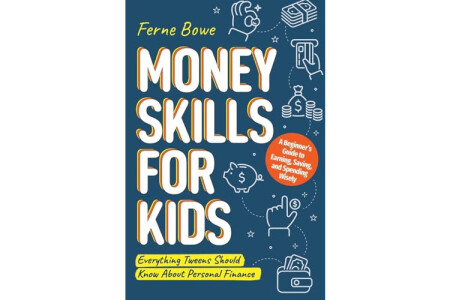
ESSENTIAL MONEY SKILLS EVERY KID SHOULD KNOW! Are you looking for a gift that will entertain your child and empower them with valuable life skills? WELL, LOOK NO FURTHER! "Money Skills for Kids," by Ferne Bowe (author of "Money Skills for Teens" and "Life Skills for Tweens"), is the book you've been searching for. Packed with practical advice, real-life examples, and interactive activities, it is designed to make the complex world of understanding money fun, accessible and engaging. Perfect for kids aged 8 to 13, this book is an educational tool - that takes the reader on the journey through the maze of money management, transforming them into savvy savers and wise spenders. READY TO START THE JOURNEY INTO THE WORLD OF MONEY? HERE'S A SNEAK PEEK AT WHAT'S INSIDE: * Unravel the mystery of earning and spending money wisely. * Learn how to transform a brilliant money-making idea into reality. * Master the art of saving with easy and effective strategies. * Take the first step in banking by choosing and opening a savings account. * Set and achieve financial goals like a pro. * Learn the crucial difference between needs and wants. * Dip your toes into the fascinating world of investing. And that's just the beginning! Every chapter is a stepping stone towards becoming financially independent. GIVE THEM THE GIFT OF MONEY SKILLS! Prepare your child for a future where money is a tool, not a challenge. Help them on their journey towards confidence, independence, and smart financial decisions. Click 'Add to Cart' now and set your child on the path to financial success.

“Instead of 1984, read this.” —Washington Post From New York Times bestselling author Lionel Shriver, a near-future speculative fiction novel that explores the aftershocks of an economically devastating U.S. sovereign debt default on four generations of a once-prosperous American family In 2029, the United States is engaged in a bloodless world war that will wipe out the savings of millions of American families. In this gripping dystopian novel, the “almighty dollar” plummets in value overnight on the international currency exchange, to be replaced by a new global currency, the “bancor.” In retaliation, the president declares that America will default on its loans. “Deadbeat Nation” being unable to borrow, the government prints money to cover its bills. What little remains to savers is rapidly eaten away by runaway inflation. The Mandibles have been counting on a sizable fortune filtering down when their ninety-seven-year-old patriarch dies. Once the inheritance turns to ash, each family member must contend with disappointment, but also—as the U.S. economy spirals into dysfunction—the challenge of sheer survival. Recently affluent, Avery is petulant that she can’t buy olive oil, while her sister, Florence, absorbs strays into her cramped household. An expat author, their aunt, Nollie, returns from abroad at seventy-three to a country that’s unrecognizable. Her brother, Carter, fumes at caring for their demented stepmother, now that an assisted living facility isn’t affordable. Only Florence’s oddball teenage son, Willing, an economics autodidact, will save this formerly august American family from the streets. A potent work of financial fiction, The Mandibles is about money. Thus it is necessarily about bitterness, rivalry, and selfishness—but also about surreal generosity, sacrifice, and transformative adaptation to changing circumstances.
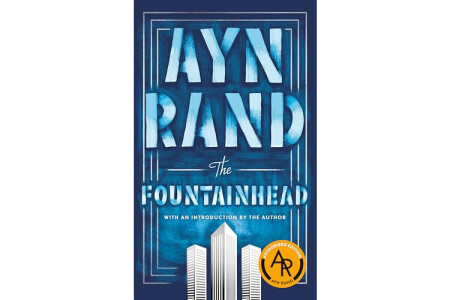
The revolutionary literary vision that sowed the seeds of Objectivism, Ayn Rand's groundbreaking philosophy, and brought her immediate worldwide acclaim. This modern classic is the story of intransigent young architect Howard Roark, whose integrity was as unyielding as granite...of Dominique Francon, the exquisitely beautiful woman who loved Roark passionately, but married his worst enemy...and of the fanatic denunciation unleashed by an enraged society against a great creator. As fresh today as it was then, Rand’s provocative novel presents one of the most challenging ideas in all of fiction—that man’s ego is the fountainhead of human progress... “A writer of great power. She has a subtle and ingenious mind and the capacity of writing brilliantly, beautifully, bitterly...This is the only novel of ideas written by an American woman that I can recall.”—The New York Times
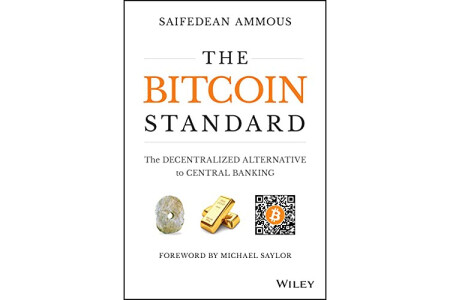
A comprehensive and authoritative exploration of Bitcoin and its place in monetary history When a pseudonymous programmer introduced “a new electronic cash system that’s fully peer-to-peer, with no trusted third party” to a small online mailing list in 2008, very few people paid attention. Ten years later, and against all odds, this upstart autonomous decentralized software offers an unstoppable and globally accessible hard money alternative to modern central banks. The Bitcoin Standard analyzes the historical context to the rise of Bitcoin, the economic properties that have allowed it to grow quickly, and its likely economic, political, and social implications. While Bitcoin is an invention of the digital age, the problem it purports to solve is as old as human society itself: transferring value across time and space. Author Saifedean Ammous takes the reader on an engaging journey through the history of technologies performing the functions of money, from primitive systems of trading limestones and seashells, to metals, coins, the gold standard, and modern government debt. Exploring what gave these technologies their monetary role, and how most lost it, provides the reader with a good idea of what makes for sound money, and sets the stage for an economic discussion of its consequences for individual and societal future-orientation, capital accumulation, trade, peace, culture, and art. Compellingly, Ammous shows that it is no coincidence that the loftiest achievements of humanity have come in societies enjoying the benefits of sound monetary regimes, nor is it coincidental that monetary collapse has usually accompanied civilizational collapse. With this background in place, the book moves on to explain the operation of Bitcoin in a functional and intuitive way. Bitcoin is a decentralized, distributed piece of software that converts electricity and processing power into indisputably accurate records, thus allowing its users to utilize the Internet to perform the traditional functions of money without having to rely on, or trust, any authorities or infrastructure in the physical world. Bitcoin is thus best understood as the first successfully implemented form of digital cash and digital hard money. With an automated and perfectly predictable monetary policy, and the ability to perform final settlement of large sums across the world in a matter of minutes, Bitcoin’s real competitive edge might just be as a store of value and network for the final settlement of large payments―a digital form of gold with a built-in settlement infrastructure. Ammous’ firm grasp of the technological possibilities as well as the historical realities of monetary evolution provides for a fascinating exploration of the ramifications of voluntary free market money. As it challenges the most sacred of government monopolies, Bitcoin shifts the pendulum of sovereignty away from governments in favor of individuals, offering us the tantalizing possibility of a world where money is fully extricated from politics and unrestrained by borders. The final chapter of the book explores some of the most common questions surrounding Bitcoin: Is Bitcoin mining a waste of energy? Is Bitcoin for criminals? Who controls Bitcoin, and can they change it if they please? How can Bitcoin be killed? And what to make of all the thousands of Bitcoin knockoffs, and the many supposed applications of Bitcoin’s ‘block chain technology’? The Bitcoin Standard is the essential resource for a clear understanding of the rise of the Internet’s decentralized, apolitical, free-market alternative to national central banks.

A top cybersecurity journalist tells the story behind the virus that sabotaged Iran’s nuclear efforts and shows how its existence has ushered in a new age of warfare—one in which a digital attack can have the same destructive capability as a megaton bomb. “Immensely enjoyable . . . Zetter turns a complicated and technical cyber story into an engrossing whodunit.”—The Washington Post The virus now known as Stuxnet was unlike any other piece of malware built before: Rather than simply hijacking targeted computers or stealing information from them, it proved that a piece of code could escape the digital realm and wreak actual, physical destruction—in this case, on an Iranian nuclear facility. In these pages, journalist Kim Zetter tells the whole story behind the world’s first cyberweapon, covering its genesis in the corridors of the White House and its effects in Iran—and telling the spectacular, unlikely tale of the security geeks who managed to unravel a top secret sabotage campaign years in the making. But Countdown to Zero Day also ranges beyond Stuxnet itself, exploring the history of cyberwarfare and its future, showing us what might happen should our infrastructure be targeted by a Stuxnet-style attack, and ultimately, providing a portrait of a world at the edge of a new kind of war.

THE BEST BOOK THAT DESCRIBES THE WORLD OF 2020's Nineteen Eighty-Four: A Novel, often published as 1984, is a dystopian social science fiction novel by English novelist George Orwell. It was published on 8 June 1949 by Secker & Warburg as Orwell's ninth and final book completed in his lifetime. Thematically, Nineteen Eighty-Four centres on the consequences of totalitarianism, mass surveillance, and repressive regimentation of persons and behaviours within society. Orwell, himself a democratic socialist, modeled the authoritarian government in the novel after Stalinist Russia. More broadly, the novel examines the role of truth and facts within politics and the ways in which they are manipulated. The story takes place in an imagined future, the year 1984, when much of the world has fallen victim to perpetual war, omnipresent government surveillance, historical negationism, and propaganda. Great Britain, known as Airstrip One, has become a province of a totalitarian superstate named Oceania that is ruled by the Party who employ the Thought Police to persecute individuality and independent thinking. Big Brother, the leader of the Party, enjoys an intense cult of personality despite the fact that he may not even exist. The protagonist, Winston Smith, is a diligent and skillful rank-and-file worker and Party member who secretly hates the Party and dreams of rebellion. He enters into a forbidden relationship with a colleague, Julia, and starts to remember what life was like before the Party came to power. Nineteen Eighty-Four has become a classic literary example of political and dystopian fiction. It also popularised the term "Orwellian" as an adjective, with many terms used in the novel entering common usage, including "Big Brother", "doublethink", "thoughtcrime", "Newspeak", "memory ho
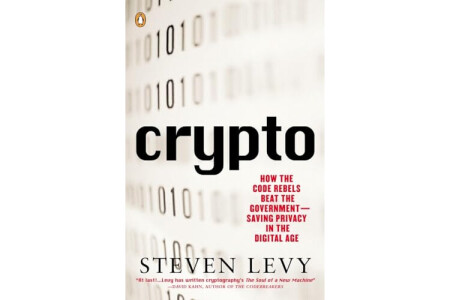
If you've ever made a secure purchase with your credit card over the Internet, then you have seen cryptography, or "crypto", in action. From Stephen Levythe author who made "hackers" a household wordcomes this account of a revolution that is already affecting every citizen in the twenty-first century. Crypto tells the inside story of how a group of "crypto rebels"—nerds and visionaries turned freedom fighters—teamed up with corporate interests to beat Big Brother and ensure our privacy on the Internet. Levy's history of one of the most controversial and important topics of the digital age reads like the best futuristic fiction.
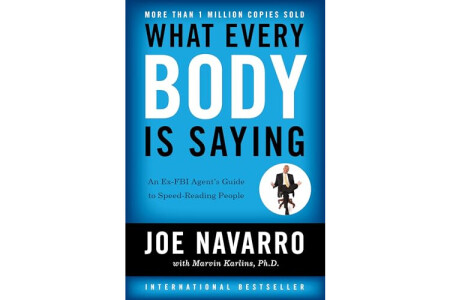
Read this book and send your nonverbal intelligence soaring. Joe Navarro, a former FBI counterintelligence officer and a recognized expert on nonverbal behavior, explains how to "speed-read" people: decode sentiments and behaviors, avoid hidden pitfalls, and look for deceptive behaviors. You'll also learn how your body language can influence what your boss, family, friends, and strangers think of you. You will discover: * The ancient survival instincts that drive body language * Why the face is the least likely place to gauge a person's true feelings * What thumbs, feet, and eyelids reveal about moods and motives * The most powerful behaviors that reveal our confidence and true sentiments * Simple nonverbals that instantly establish trust * Simple nonverbals that instantly communicate authority Filled with examples from Navarro's professional experience, this definitive book offers a powerful new way to navigate your world... He says that's his best offer. Is it? She says she agrees. Does she? The interview went great—or did it? He said he'd never do it again. But he did.
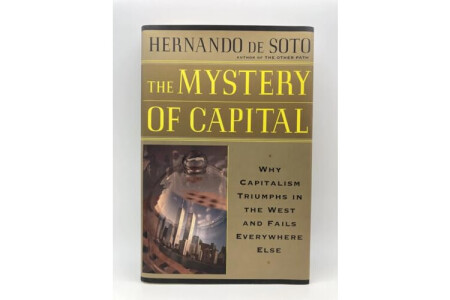
"The hour of capitalism's greatest triumph," writes Hernando de Soto, "is, in the eyes of four-fifths of humanity, its hour of crisis." In The Mystery of Capital, the world-famous Peruvian economist takes up the question that, more than any other, is central to one of the most crucial problems the world faces today: Why do some countries succeed at capitalism while others fail?In strong opposition to the popular view that success is determined by cultural differences, de Soto finds that it actually has to do with the legal structure of property and property rights. Every developed nation in the world at one time went through the transformation from predominantly informal, extralegal ownership to a formal, unified legal property system, but in the West we've forgotten that creating this system is also what allowed people everywhere to leverage property into wealth. This persuasive book will revolutionize our understanding of capital and point the way to a major transformation of the world economy.


Primer volumen de la serie Mundodisco de Terry Pratchett. En un mundo plano sostenido por cuatro elefantes impasibles -que se apoyan en la espalda de una tortuga gigante- habitan los estrafalarios personajes de esta novela: un hechicero avaro y torpe, un turista ingenuo cuyo fiero equipaje le sigue a todas partes sostenido por cientos de patitas, dragones que solo existen si se cree en ellos, gremios de ladrones y asesinos, espadas mágicas, la Muerte y, por supuesto, un extenso catálogo de magos y demonios... En esta serie de novelas se dan cita todos los temas y situaciones del género fantástico, vistos a través del personalísimo y corrosivo sentido de la comicidad de un autor inglés que se ha convertido en uno de los escritores de humor de mayor éxito y fama en el mundo. La crítica ha dicho... «Un consejo. Id a vuestra librería de confianza, pedid un libro de Terry Pratchett y abríos una nueva puerta que os llevará a un mundo de carcajadas, de ironía, de frases lapidarias, de intrigas y de amores. ¡Bienvenidos al Mundodisco!» El País «Brillante, ingenioso e hilarante.» Washington Post
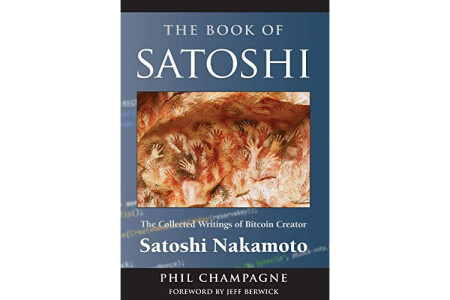
Have you, like the rest of the world, speculated as to the identity of Satoshi Nakamoto, anonymous creator of Bitcoin? The world's first cryptocurrency, Bitcoin went online in 2009 and has since revolutionized our concepts of currency and money. Not supported by any government or central bank, completely electronic, Bitcoin is a virtual currency based on advanced cryptographic systems. Like the currency he created, the identity of Bitcoin's creator Satoshi Nakamoto is virtual, existing only online. The Nakamoto persona, which may represent an individual or a group, exists only in the online publications that introduced and explained Bitcoin during its earliest days. Here, collected and professionally published for the first time are the essential writings that detail Bitcoin's creation. Included are • Satoshi Nakamoto Emails and Posts on Computer Forums Presented in Chronological Order • Bitcoin Fundamentals Presented in Layman's Terms • Bitcoin's Potential and Profound Economic Implications • The Seminal Paper Which Started It All The Book of Satoshi provides a convenient way to parse through what Bitcoin's creator wrote over the span of the two years that constituted his "public life" before he disappeared from the Internet . . . at least under the name Satoshi Nakamoto. Beginning on November 1st 2009 with the publication of the seminal paper describing Bitcoin, this public life ends at about the time PC World speculated as to a possible link between Bitcoin and WikiLeaks, the infamous website that publishes leaked classified materials. Was there a connection? You be the judge. Nakamoto's true identity may never be known. Therefore the writings reproduced here are probably all the world will ever hear from him concerning Bitcoin's creation, workings, and theoretical basis. Want to learn more about Bitcoin? Go directly to the source-the writings of the creator himself, Satoshi Nakamoto!

The world's top trader's reveal the secrets of their phenomenal success! How do the world's most successful traders amass tens, hundreds of millions of dollars a year? Are they masters of an occult knowledge, lucky winners in a random market lottery, natural-born virtuosi―Mozarts of the markets? In search of an answer, bestselling author Jack D. Schwager interviewed dozens of top traders across most financial markets. While their responses differed in the details, all of them could be boiled down to the same essential formula: solid methodology + proper mental attitude = trading success. In Market Wizards Schwager lets you hear, in their own words, what those super-traders had to say about their unprecedented successes, and he distils their responses down into a set of guiding principles you can use to become a trading star in your own right. * Features interviews with superstar money-makers including Bruce Kovner, Richard Dennis, Paul Tudor Jones, Michel Steinhardt, Ed Seykota, Marty Schwartz, Tom Baldwin, and more * Tells the true stories behind sensational trading coups, including the one about the trader who turned $30,000 into $80 million, the hedge fund manager who's averaged 30% returns every year for the past twenty-one years, and the T-bond futures trader who parlayed $25,000 into $2 billion in a single day! "Market Wizards is one of the most fascinating books ever written about Wall Street. A few of the 'Wizards' are my friends―and Jack Schwager has nailed their modus operandi on the head." --Martin W. Zweig, Ph.D., Editor, The Zweig Forecast

There are products from different external stores in your basket, so a wish for each external store will be created.
Note: You will be able to configure each wish individually before publishing it.

 Spanish
(Español)
Spanish
(Español)
 German
(Deutsche)
German
(Deutsche)
 French
(Français)
French
(Français)
 Italian
(Italiano)
Italian
(Italiano)
 Portuguese
(Portugues)
Portuguese
(Portugues)

