

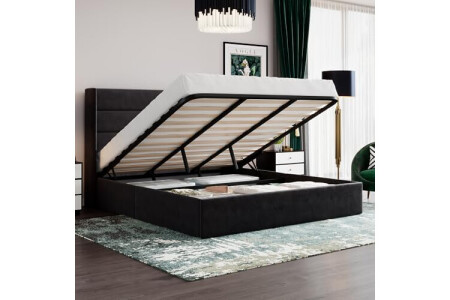
- Underneath Storage: Lift-up design allows large underneath space to get used. Suitable for space-eating and low usage-frequency belongings such as suitcases, storage bags, and boxes for out-season beddings - Wingback Headboard: Horizontal channel headboard with wingback adds simple but modern aesthetics to your bedroom - Lifting Mechanism Design: With hydraulic lifting mechanism, you are able to pop up the platform effortlessly. No worries about the mattress sliding with the protective device back the frame - Modern and Stylish: Modern horizontal channel headboard with wingback will protect your mattress from sliding and stop your pillows from falling. The stylish velvet allows this king bed frame to suit various room decoration styles - No Box Spring Needed: Solid and narrow-spaced wooden slats with plastic buckles enable this king size bed frame to work with the mattress directly without a box spring
Color: Black
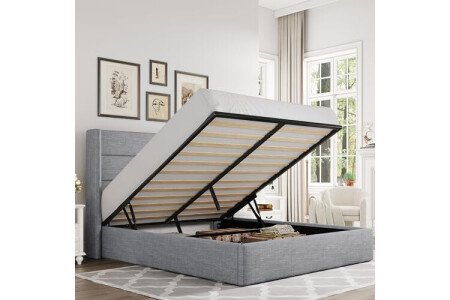
- Space-Saving Storage: With its lifting up storage feature, this bed frame provides ample space to store extra bedding, clothing, shoes, and other items, especially helpful for smaller bedrooms or apartments where storage space is limited - Easy to Use: The lifting up storage feature is easy to operate, making it simple to access your stored items. The gas lift mechanism ensures smooth and easy lifting, while the sturdy frame provides stability and durability - Elegant Headboard: High wingback headboard adds elegant aesthetics to your bedroom. Horizontal channel pattern illuminates stylish and minimalist trends - Stylish Design: The color and upholstered fabric of this bed frame make it a stylish addition to any bedroom. The headboard adds an extra touch of elegance, making the bed frame the centerpiece of your room - No Box Spring Needed: Solid wood slats provides strong support. No need of any box spring. All the parts you need are efficiently packaged in ONE BOX with a detailed instruction book. Assembly video is available if needed
Style: Modern Color: Light Grey
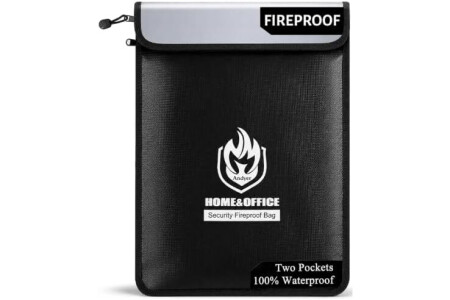
- 100% Fireproof & Water Resistant: This UL certified upgraded fireproof bag is constructed primarily of fire-resistant, heat-insulating functional materials that can withstand ultra-high temperatures. Meantime, the Sealed zippers are totally waterproof which can survive the spray of firefighter's hose on full blast, provides 360° security seal and maximum protection for your documents - Upgraded Waterproof Zippers & 2-Pocket Design & Large Capacity: Two pockets, two zips for added security and convenience. Let your files be easily classified and stored with our fire proof bag. Large size of 15”x 11” allows you to better keep and classify your most standard and legal documents files, passport, birth certificate, marriage certificate, contract and any other documents, cash, letters, photos and other valuables - High-Viz for Fast Evacuation at Night: Benefit by the night reflective strip design, you can locate your fire proof money bag for cash immediately even at night! Time is life in a fire, our goal is to quickly find your most important things and go in a critical moment - Durable, Foldable, Portable: Our fireproof important document organizer is the perfect design to travel with and store safely and conveniently. With a hanging trap, our travel document holder is super easy to grab and carry no matter at home or on office - A Great Gift Option: This fireproof money bag is durable and perfect for your daily and emergency use, as well as a unique and practical gifting option for your family and friends.
Color: Jet Black
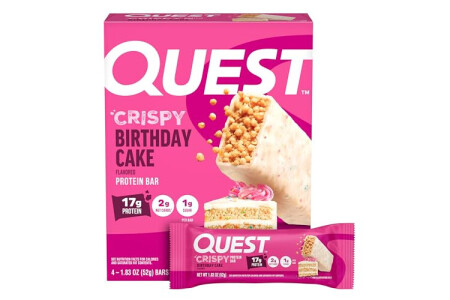
- HACK YOUR SNACK. Quest Crispy Birthday Cake Flavored Bars have sparkle-coated frosting, a wonderfully chewy texture, and the sweet vanilla flavor of birthday cake with 1g of sugar, and 2g of net carbs - AT HOME OR ON-THE-GO. Quest Crispy Birthday Cake Flavored Bars with 17g of grab & go protein are just right for your morning commute, as a tasty treat at your desk, or a delicious way to refuel after a workout. - PROTEIN FORWARD. 17g of protein, 1g of sugar, and 2g of net carbs per serving. Support your fitness goals and enjoy a crispy, chewy bar with the deliciously sweet, rich vanilla flavor of birthday cake. - Offered in 4ct and 12ct cartons of individually wrapped 1.83oz bars - SNACK LIKE A GENIUS. Quest turns your fave snacks into the ultimate hacks. So reaching your goals has never been tastier. Quest is big on protein, low on sugar and huge on flavor. Yep. It’s basically cheating.
Flavor Name: Birthday Cake Size: 4 Count (1.83 Ounce Bars)
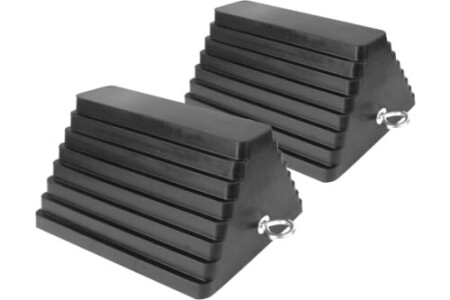
- The information below is per-pack only - Heavy-Duty Rubber Construction – Built from dense, oil-resistant rubber for maximum grip and durability under heavy loads. Withstands compression and harsh conditions. - Large 10" x 8" x 6" Dimensions – Oversized profile provides increased surface contact and stability for cars, trailers, motorcycles, and RVs. - Non-Slip All-Weather Grip – Textured surface resists slipping on gravel, pavement, and garage floors. Performs reliably in rain, snow, and extreme temperatures. - Steel Eyebolt for Chain Attachment – Integrated steel eyebolt allows secure tethering or linking (chain not included). Enhances safety and retrieval convenience. - Wide Base for Stability – Broad footprint improves rigidity and prevents tipping or shifting during use. - Versatile Use Scenarios – Ideal for driveways, slopes, job sites, garages, and storage yards. Suitable for daily parking, trailer loading, or long-term vehicle storage. - Reliable Alternative to Plastic Chocks – Outperforms resin and plastic models with superior traction, weight, and resistance to oil and UV exposure.
Size: 80681 - 10" x 8" x 6", 10-Pack (5 x 2-Pack)
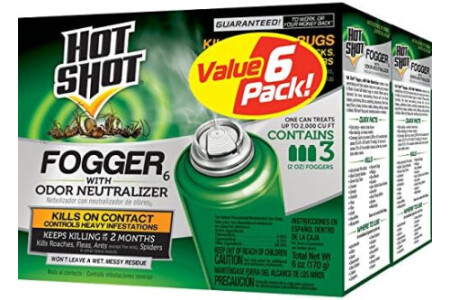
- KILLS ON CONTACT: Hot Shot Fogger With Odor Neutralizer kills on contact and controls heavy infestations – and keeps killing for up to 2 months. - KILLS HIDDEN BUGS: Creates a fine, penetrating mist that reaches deep into cracks and crevices to kill the bugs you see and kill the bugs you don't see. - WHERE TO USE: Use in enclosed spaces such as apartments, attics, basements, barns, boat cabins, cabins, campers, crawl spaces, garages, homes, households, sheds, storage areas and trailers. - NON-STAINING: This clear, non-staining formula won't leave a wet, messy residue. - EACH CAN COVERS 2,000 CU FT: Treats 2,000 cubic feet of unobstructed space
Style: Odor Neutralizer
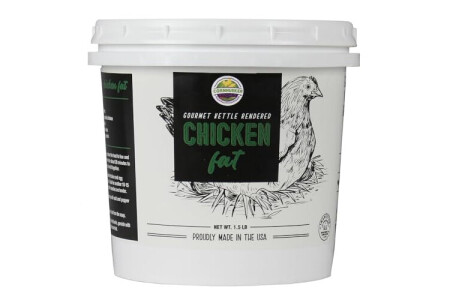
- GOURMET CHICKEN FAT – Discover the delights of Gourmet Kettle Rendered Chicken Fat! Each tub contains 1.5 lbs. - SHELF STABLE – This is shelf-stable and doesn't require refrigeration. However, refrigerating it can extend its shelf life well beyond 2 years. - NATURALLY DELICIOUS – Cornhusker Gourmet Kettle Rendered Chicken Fat contains No added Preservatives and No Artificial Ingredients. - VERSATILE FAT FOR COOKING – Ideal for roasting, frying, searing and sautéing your mouthwatering meats, seafood and veggies. It's just perfect for all your cooking and baking needs! - MADE IN USA – All of our Gourmet Kettle Rendered Chicken Fat is proudly made in the USA.
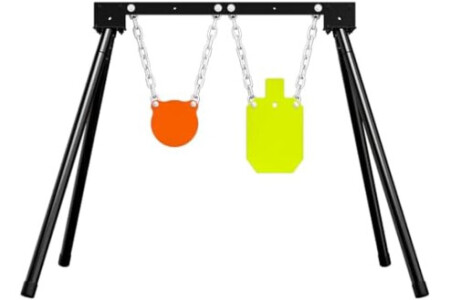
- Save Big Money: Get everything you need in one package! Our AR500 complete shooting target system kit features easy assembly & disassembly for one person; This AR500 target stand complete set saves you both time and money compared to individual purchases - Perfect Combination: Package includes 1 x Shooting Target Stand & 2 x Chain Mounting Hardware Kits & 3/8" thick - 6" Gong Target + 7" x 12" Torso Target, ideal for various firearms at different shooting distances - AR500 Steel Target: 3/8" AR500 metal targets with a durable surface Powder Coat Finish, Laser Cut from solid AR500 steel to withstand repeated shots, even from high-velocity rifles; Neon Color ensures high visibility under various lighting conditions - Target Stand: Heavy duty steel construction with Rust-Proof powder coat finish, replacement parts readily available if any components wear out; Compactly designed steel target stand ensures easy transport and stability on uneven terrain - Chain Mounting Kit: 5/16" 30-proof chains and mounting accessories designed to hold the targets at a slanted angle for Safer Shooting, also allows adjusting target angle for bullet deflection
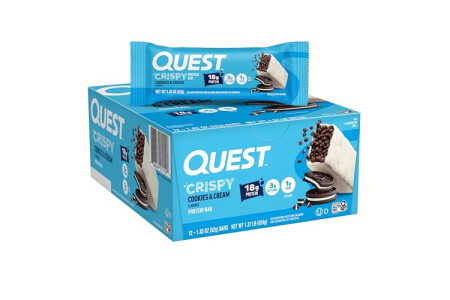
- HACK YOUR SNACK. Quest Cookies & Cream Flavored Crispy Protein Bars have a sweet, creamy coating outside, chewy and crispy crunch inside—and cookies & cream flavor with 1g of sugar, and 3g of net carbs* - AT HOME OR ON-THE-GO. Quest Cookies & Cream Flavored Crispy Protein Bars with 18g of grab & go protein* are great for your morning commute, as a tasty treat at your desk, or a delicious way to refuel after a workout - PROTEIN FORWARD. 18g of protein, 1g of sugar, and 3g of net carbs* per serving. Support your fitness goals and enjoy a crispy, chewy protein bar with the unbeatable flavor combo of cookies & cream - Offered in 12ct cartons of individually wrapped 1.83oz bars - SNACK LIKE A GENIUS. Quest turns your fave snacks into the ultimate hacks. So reaching your goals has never been tastier. Quest is big on protein, low on sugar and huge on flavor. Yep. It’s basically cheating
Flavor Name: Cookies & Cream Size: 12 Count (1.83 Ounce Bars)
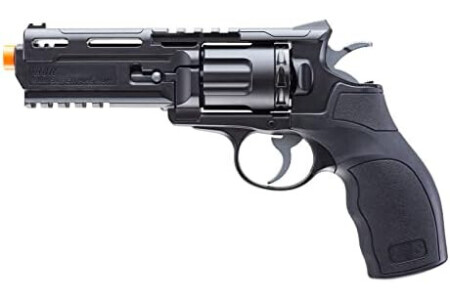
- Revolver Airsoft pistol design - Powered by a 12-gram CO2 cartridge (CO2 NOT included. To ensure a proper seal and for best performance, Umarex-brand CO2 is recommended.) - Mag capacity of 10 rounds - Shoots 6mm plastic airsoft BBs at up to 325 fps - Length: 10 inches; Weight: 1.5 lbs; Compatible with spare magazine part number: 2279554
Color: Black
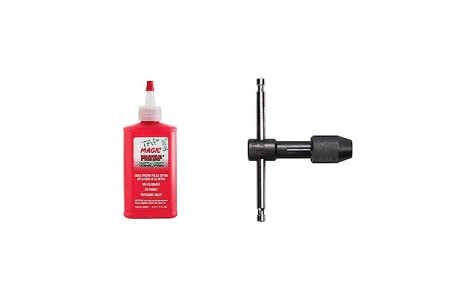
- Includes 4 oz. Tap Magic ProTap cutting fluid that is biodegradable and ideal for hard metals like stainless steel (product 1). - Contains IRWIN T-handle tap wrenches made of shock-resistant S2 steel, ideal for maintenance and repairs (product 2). - Tap wrenches fit tap sizes 1/4 to 1/2 inches (product 2). - Cutting fluid dissipates heat rapidly and promotes longer tool life (product 1). - Tap wrenches manufactured in China (product 2).

No description available.
Color: Tulip Daisy

There are products from different external stores in your basket, so a wish for each external store will be created.
Note: You will be able to configure each wish individually before publishing it.

 Spanish
(Español)
Spanish
(Español)
 German
(Deutsche)
German
(Deutsche)
 French
(Français)
French
(Français)
 Italian
(Italiano)
Italian
(Italiano)
 Portuguese
(Portugues)
Portuguese
(Portugues)